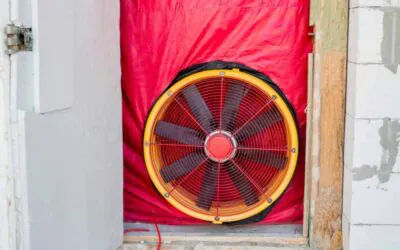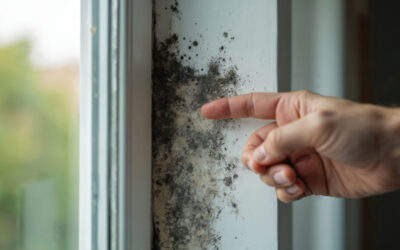
Every spring, most homeowners in and around Spokane and North Idaho will probably notice similar annoying issues such as musty smells, damp crawl spaces, condensation, and wet insulation. What many won’t realize is that the issues are usually connected to each other. Spring moisture doesn’t just create one problem. It can contribute to mold growth, increase radon entry, and reduce insulation performance all at the same time.
That moisture does not stay invisible. It feeds mold growth, changes the soil-gas pressure dynamics that drive radon into the home, and soaks insulation until it no longer performs, turning three separate problems into one compounding indoor air quality and energy-loss event.
Spring rainfall and snowmelt are among the biggest drivers of basement and crawl space moisture problems. That moisture feeds basement mold in Spokane, which, per the EPA, needs wet surfaces within 24–48 hours to begin growing, and shifts soil-gas pressure dynamics that drive radon mitigation concerns (Spokane County sits in EPA Radon Zone 1, the highest-risk designation), and causes wet insulation problems when it saturates fiberglass and cellulose insulation, which lose effective R-value when wet. The fix is moisture control first, then targeted testing and remediation.
This guide walks through each of the three risks in order, grounded in EPA, DOE, and Washington-specific data, and explains the specific signs homeowners in Spokane, Liberty Lake, Coeur d’Alene, and the greater Palouse should watch for each spring.
Seeing spring condensation, musty smells, or damp insulation? A whole-home assessment can pinpoint exactly where moisture is getting in — and what it’s doing to your indoor air.
Why Spring Rainfall Hits Inland Northwest Basements Hardest
Spring creates ideal conditions for basement moisture because melting snow and seasonal rainfall can saturate the soil around home foundations. This can increase hydrostatic pressure around your foundation, allowing moisture and water vapor to move into crawl spaces and basements.
Our environmental crews commonly see elevated moisture levels in Spokane-area crawl spaces between March and May. This is especially common in older homes without vapor barriers or updated drainage systems.
The Inland Northwest Spring Moisture Pattern
Spring in the Spokane–Coeur d’Alene region combines two moisture sources: melting snowpack and one of the region’s wettest seasonal precipitation periods. This combination creates sustained ground saturation around foundations.
That saturation increases hydrostatic pressure, which is the primary force pushing water and water vapor into below-grade spaces. Even when liquid water isn’t visible, moisture is still entering.
The U.S. Department of Energy notes that air movement carries more than 98% of water vapor through building cavities. That means even a structurally “dry” basement can still accumulate significant moisture through air leakage alone, contributing to challenges for home moisture control in spring.
Why Basements and Crawl Spaces Are Ground Zero
Below-grade spaces are in direct contact with the wettest part of the property during spring. Cold concrete walls and slabs act as condensation surfaces when warmer air meets them, increasing indoor humidity mold growth risk. The DOE notes that moisture control is particularly important for basements because they are prone to water intrusion, humidity problems, and mold, and that properly insulating a foundation also helps block insect infestation and radon infiltration.

Basements and crawl spaces in the Inland Northwest basement humidity zone are especially vulnerable because:
- They experience sustained ground contact moisture
- They have colder surfaces prone to condensation
- They often contain insulation that can trap moisture once it enters
The Three Problems, One Cause
Problem 1: Mold Follows Moisture
The EPA is clear: “the key to mold control is moisture control.” Water-damaged areas must be dried within 24–48 hours to prevent growth. They also recommend keeping indoor relative humidity below 60% — ideally 30–50% — to prevent conditions that allow mold spores to take hold on wet surfaces.
In Spokane conditions, common spring triggers for basement mold include:
- Wet rim joists
- Damp sill plates
- Condensation behind stored materials
- Saturated fiberglass insulation
These conditions allow mold to develop quickly, especially when indoor humidity levels rise.
If moisture persists, what starts as a minor issue can quickly require professional mold remediation services to fully resolve contamination and prevent recurrence.
Problem 2: Water Changes How Radon Moves
Radon is a naturally occurring radioactive gas that enters homes through cracks and openings in foundations. The EPA recommends action at or above 4 pCi/L. Spokane County is in EPA Radon Zone 1, the highest risk classification, making radon testing in Spokane County especially important.
Moisture changes how radon behaves. Saturated soil alters pressure gradients, making it easier for soil gases, including radon, to move into the home. Homeowners who test during dry months may see higher readings during or after prolonged wet weather. This is why seasonal moisture shifts directly affect radon mitigation in Washington, and why many homes require follow-up testing or professional radon mitigation and testing after spring.
Problem 3: Wet Insulation Stops Working
The DOE notes that insulation moderates heat flow only when installed properly and kept dry, meaning it performs as designed only when it stays dry. Once moisture enters, insulation moisture damage begins immediately.
Common wet insulation problems include:
- Fiberglass batts lose R-value when saturated
- Cellulose insulation settles after absorbing moisture
- Spray foam showing signs of separation at seams

Moisture not only reduces performance but also creates conditions for mold growth within or behind insulation materials.
The Washington State University Energy Program, which provides technical support for the 2021 Washington State Energy Code – Residential (effective March 15, 2024), notes that a conditioned crawl space requires a continuous Class I vapor retarder and sealed radon system to perform as designed, underscoring how tightly linked moisture, radon, and insulation performance are in Washington construction. In moist Inland Northwest environments, this often leads to hidden failures that impact both energy efficiency and indoor air quality.
What to Do This Spring
Step 1: Look for the Warning Signs
- Early detection is key. Watch for:
- Musty or earthy odors
- Condensation on windows or pipes
- Efflorescence (white mineral deposits) on basement walls
- Damp or discolored insulation
- Visible water near the wall slab joints
- Elevated humidity (above 60%)
These are all indicators of spring snowmelt basement moisture intrusion.
Step 2: Test Before You Assume
Testing prevents misdiagnosis. For radon, the Washington State Department of Health recommends that every home be tested. Levels can vary significantly, even between neighboring homes.
For mold, visual inspection combined with air and surface sampling helps identify both visible and airborne spore loads. It is especially important to include indoor air testing, to identify where moisture may be affecting air quality without obvious signs. Testing first prevents the common mistake of paying to remediate a symptom while the moisture source keeps feeding the problem.

Step 3: Address the Moisture Source First
EPA guidance for remodeling is explicit: moisture problems must be corrected before any indoor air quality work.
This can include:
- Redirecting downspouts
- Improving grading
- Installing drainage systems
- Sealing air leaks and vapor pathways
- Installing vapor barriers
Once the source is addressed, remediation becomes effective and lasting. At that point, solutions such as mold removal, radon mitigation, and replacement of damaged insulation, supported by professional insulation services, can restore performance and indoor air quality.
Frequently Asked Questions
Why is spring the worst season for basement moisture in the Inland Northwest?
Spring combines melting snowpack with the region’s historically wettest seasonal precipitation pattern, saturating the ground around foundations and pushing water and water vapor into basements and crawl spaces.
How quickly can mold start growing after a basement gets wet?
The EPA states that water-damaged areas and items should be dried within 24–48 hours to prevent mold growth.
Does spring rainfall actually affect radon levels?
Saturated soil can change the pressure gradients that determine how easily soil gas — including radon — migrates into a home. Homes in Spokane County, which sits in EPA Radon Zone 1, should be tested and may see elevated readings during wet periods.
Does wet insulation need to be replaced?
It depends on the material and duration of wetting, but fiberglass and cellulose lose thermal performance when wet, and prolonged moisture supports mold growth on or behind the insulation. The moisture source must be corrected first, then the insulation assessed.
What's the ideal indoor humidity level to prevent mold?
The EPA recommends keeping indoor relative humidity below 60%, ideally in the 30–50% range.
Is my home required to have a radon mitigation system in Washington?
Spokane County is one of six Washington counties that require radon mitigation in newly constructed homes and additions. Existing homes are not required to mitigate, but the Washington State Department of Health strongly recommends testing.
Conclusion
Spring rainfall and basement moisture in Inland Northwest are the single largest drivers of below-grade problems in the region, and they don’t stay contained. The moisture that enters feeds mold growth, shifts how radon enters the home, and degrades the insulation that’s supposed to keep conditioned air inside.
The three problems share one cause, which means they share one starting point for a fix: identify where moisture is getting in, measure what it has already affected, and remediate from the source outward.
Homeowners in Spokane, Liberty Lake, Coeur d’Alene, and across the Inland Northwest don’t need to wait for visible damage. The best time to address moisture issues is before they become mold, radon, or insulation problems. Spring is the ideal time to evaluate your home’s health and make improvements that protect comfort, efficiency, and indoor air quality year-round. To schedule your consultation and evaluation today, contact Specialty Group at 509-214-0906.
References
National Weather Service, Spokane WA Forecast Office. “Climate Tables and Graphs for Key Sites in Eastern WA and North ID.” National Oceanic and Atmospheric Administration, www.weather.gov/otx/cliplot.
U.S. Department of Energy. “Insulation.” Energy Saver, www.energy.gov/energysaver/insulation.
U.S. Department of Energy. “Moisture Control.” Energy Saver, www.energy.gov/energysaver/moisture-control.
U.S. Department of Energy. “Where to Insulate in a Home.” Energy Saver, www.energy.gov/energysaver/where-insulate-home.
U.S. Environmental Protection Agency. “A Brief Guide to Mold, Moisture, and Your Home.” EPA, www.epa.gov/mold/brief-guide-mold-moisture-and-your-home.
U.S. Environmental Protection Agency. “Mold Course Chapter 9: Preventing Mold Growth.” EPA, www.epa.gov/mold/mold-course-chapter-9.
U.S. Environmental Protection Agency. “Radon-Resistant Construction Basics and Techniques.” EPA, www.epa.gov/radon/radon-resistant-construction-basics-and-techniques.
U.S. Environmental Protection Agency. “Remodeling Your Home and Indoor Air Quality.” EPA, www.epa.gov/indoor-air-quality-iaq/remodeling-your-home-and-indoor-air-quality.
U.S. Environmental Protection Agency. “Washington – EPA Map of Radon Zones.” EPA, www.epa.gov/sites/default/files/2014-08/documents/washington.pdf.
Washington State Department of Health. “Radon.” Washington State Department of Health, doh.wa.gov/community-and-environment/contaminants/radon.
Washington State University Energy Program. “Energy Code.” WSU Energy Program, www.energy.wsu.edu/buildingefficiency/energycode.aspx.