
Every spring, Washington homeowners discover mold in attics, crawl spaces, and behind walls, often months after the moisture that caused it first appeared. According to the Washington State Department of Health, mold grows on surfaces, including insulation, when moisture is present. What many homeowners don’t realize is that the conditions for mold growth often develop quietly during the wet winter months.
The EPA confirms that mold hidden in roofing materials can result from insufficient insulation. Condensation on cold surfaces where insulation is inadequate creates conditions for mold growth. Once established, mold can pose serious health risks and damage building materials. This guide explains why spring is the peak mold-discovery season in Washington, which areas of the home are most vulnerable, and how insulation and air sealing help mitigate the moisture conditions that encourage mold growth.
Washington’s wet winters and cool temperatures push moisture into attics, crawl spaces, and wall cavities. As spring temperatures rise, that trapped moisture creates condensation on cold surfaces, creating an environment where mold can thrive. Proper insulation helps mitigate these conditions by reducing the temperature differences that cause condensation, while air sealing limits the movement of warm, moist air into unconditioned spaces. ENERGY STAR estimates homeowners can save an average of 15% on heating and cooling costs by sealing air leaks and adding insulation, while also reducing the moisture intrusion that contributes to mold growth.
Not sure if your insulation is contributing to moisture problems? A professional evaluation can identify where your home is most vulnerable. In Eastern Washington, including Spokane, many homes fall below current code standards like R-60 attic insulation and tight air sealing requirements, increasing the risk of condensation and mold. At Specialty Group, we regularly inspect homes across Eastern Washington and see how winter moisture combined with insufficient insulation can lead to hidden mold issues discovered months later.
The Spring Mold Cycle in Washington Homes
How Winter Moisture Becomes Spring Mold
Washington receives the majority of its annual precipitation between October and April. During this time, moisture saturates the soil around foundations, enters crawl spaces, and accumulates in roofing and attic assemblies.
The Washington State Department of Health explains that mold spores need moisture to grow and can colonize on surfaces such as wood, ceiling tiles, and insulation. Throughout the winter, this moisture often remains trapped in building materials.

As temperatures begin to rise in spring, warm indoor air comes into contact with colder surfaces inside walls, attics, and crawl spaces. The U.S. Department of Energy explains that when air reaches its dew point, moisture condenses on the first cold surface it encounters. If that surface is inside a wall cavity or an attic, the result can be wet insulation and damp framing, creating ideal conditions for mold growth.
Why This Is a Seasonal Pattern
Mold growth often begins slowly during the wet winter months, then accelerates as temperatures warm in spring. This is why many homeowners first notice mold during spring cleaning, even though the underlying issue started earlier.
The EPA notes that mold can remain hidden in roof materials above ceilings due to leaks or insufficient insulation. At the same time, rising outdoor humidity combined with lingering indoor moisture can push indoor humidity levels above recommended thresholds.
The EPA recommends maintaining indoor relative humidity between 30% and 50%. In spring, many Washington homes exceed this range, creating an environment where mold can spread more quickly.
Where Mold Hides — And Why Insulation Matters
Attics
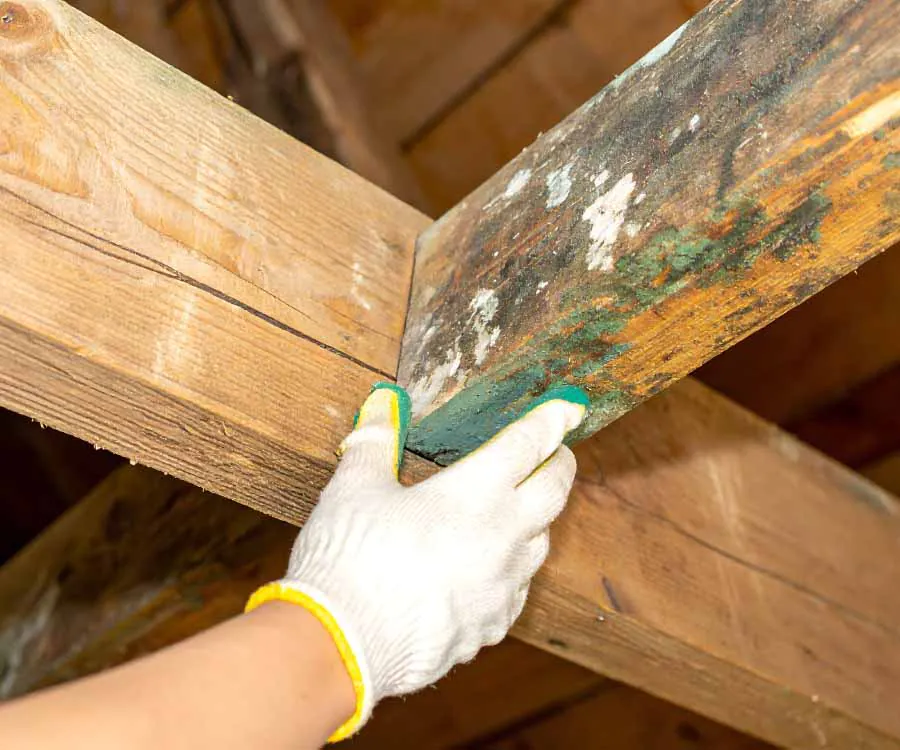
Attics are one of the most common areas for mold growth. Warm, moist air from living spaces naturally rises and enters the attic. If insulation levels are low, roof surfaces remain cold, and that moisture condenses on the underside of the roof sheathing. This attic condensation is an easy breeding ground for mold. The WSU Extension Energy Program notes that tightening the structure with proper air sealing reduces the chance of mold and rot because moisture cannot enter and become trapped in cavities.
The Washington State Energy Code requires R-60 insulation in attics, but many older homes in Washington still have R-19 or less. This gap significantly increases the likelihood of condensation and mold.
Crawl Spaces
Crawl spaces are particularly vulnerable to moisture problems. The U.S. Department of Energy identifies crawl spaces as areas where humidity, ground moisture, and poor insulation can combine to create mold-friendly conditions.
After months of winter precipitation, the soil beneath homes remains saturated. Without proper insulation and moisture control, crawl spaces can be vulnerable to moisture intrusion, which can affect floor systems and indoor air quality. To prevent crawl space mold in your Washington home, ensure you are taking the proper precautions and safeguards.
Walls and Framing
Wall cavities can also trap moisture, especially when insulation is insufficient or improperly installed. The Department of Energy notes that wet insulation loses much of its thermal resistance and can contribute to mold growth and wood rot.
The EPA recommends adding insulation to reduce the potential for condensation on cold surfaces such as exterior walls, piping, and roofs. By keeping these surfaces warmer, insulation helps reduce the likelihood of moisture accumulation.
How Insulation and Air Sealing Help Mitigate Mold Conditions
Insulation Reduces Condensation
Insulation works by slowing heat transfer, which helps keep interior surfaces warmer during colder conditions. The Department of Energy explains that this reduces temperature differences within building assemblies, which in turn lowers the risk of condensation forming on cold surfaces.
The EPA also recommends using insulation to raise surface temperatures where condensation is likely. By reducing condensation, insulation helps mitigate one of the primary conditions that allow mold to grow. When it comes to mold prevention, insulation is an easy place to start.
Air Sealing Limits Moisture Transport
Air movement plays a major role in how moisture travels through a home. The Department of Energy states that air leakage accounts for more than 98% of water vapor movement in building cavities.
Air sealing helps limit the flow of warm, moisture-laden air into attics, walls, and crawl spaces. By reducing this airflow, homeowners can significantly decrease the amount of moisture that reaches vulnerable areas. When it comes to air sealing, mold mitigation is a common reason homeowners take that step.

ENERGY STAR estimates that sealing air leaks and adding insulation can reduce heating and cooling costs by an average of 15%, while also helping control the moisture movement that contributes to mold conditions. This makes air sealing a key part of improving energy efficiency and moisture control in Washington homes.
Spray Foam: Insulation and Air Barrier in One
Spray foam insulation provides both thermal resistance and an air barrier in a single application. This combination addresses the two primary drivers of moisture-related mold conditions: temperature differences and air movement.
By reducing both heat transfer and air leakage, spray foam can be an effective option in areas prone to condensation and moisture buildup.
Frequently Asked Questions
Why do Washington homeowners find more mold in spring?
Winter rain and snow saturate building assemblies with moisture. As spring temperatures rise, that moisture creates condensation and elevated humidity, conditions that allow mold to grow rapidly on surfaces, including insulation, drywall, and wood framing.
Can insulation prevent mold?
Insulation alone does not prevent mold, but it plays a significant role in mitigating the conditions that allow mold to thrive. Proper insulation reduces condensation by minimizing temperature differentials on interior surfaces, and when paired with air sealing, it limits the moisture-laden air that reaches vulnerable areas.
Where should I check for mold in spring?
Focus on attic sheathing, crawl space joists and insulation, behind bathroom and kitchen walls, and around windows where condensation collects. Musty odors are often the first indicator of hidden mold.
What indoor humidity level helps reduce mold risk?
The EPA recommends keeping indoor relative humidity below 60%, ideally between 30% and 50%. Proper insulation, air sealing, and ventilation all contribute to maintaining healthy humidity levels.
Conclusion
Spring mold is not inevitable; it’s a signal that moisture is entering and remaining in areas where it shouldn’t. Addressing the root causes of moisture, rather than just the visible symptoms, is key to protecting your home. Spring moisture problems in Spokane are often preventable with the right improvements to insulation, air sealing, and moisture control.
Proper insulation and air sealing help mitigate the conditions that allow mold to take hold by reducing condensation and limiting moisture movement throughout the home. When combined with moisture control strategies and professional evaluation, these improvements can make a significant difference in both home performance and indoor air quality.
If you suspect mold or moisture issues in your home, it’s important to take action early. Specialty Group provides professional insulation and air sealing solutions to help mitigate moisture issues before they lead to mold growth.
Contact Specialty Group today for a professional evaluation. Our team provides insulation and air sealing upgrades to help mitigate moisture issues before they lead to mold growth, and our environmental division offers comprehensive mold testing and remediation, all under one roof. Call (509) 214-0915 or visit specialtygroup.co/contact to get started.
References
U.S. Department of Energy. “Insulation.” Energy Saver, www.energy.gov/energysaver/insulation.
U.S. Department of Energy. “Moisture Control.” Energy Saver, www.energy.gov/energysaver/moisture-control.
U.S. Department of Energy. “Vapor Barriers or Vapor Retarders.” Energy Saver, www.energy.gov/energysaver/vapor-barriers-or-vapor-retarders.
U.S. Department of Energy. “Where to Insulate in a Home.” Energy Saver, www.energy.gov/energysaver/where-insulate-home.
ENERGY STAR. “Why Seal and Insulate?” U.S. Environmental Protection Agency, www.energystar.gov/saveathome/seal_insulate/why-seal-and-insulate.
ENERGY STAR. “Methodology for Estimated Energy Savings from Sealing and Insulating.” U.S. Environmental Protection Agency, www.energystar.gov/saveathome/seal_insulate/methodology.
U.S. Environmental Protection Agency. “A Brief Guide to Mold, Moisture, and Your Home.” Indoor Air Quality, www.epa.gov/mold/brief-guide-mold-moisture-and-your-home.
U.S. Environmental Protection Agency. “Mold Course Chapter 2.” Indoor Air Quality, www.epa.gov/mold/mold-course-chapter-2.
U.S. Environmental Protection Agency. “What Are Ten Things I Need to Know about Mold?” Indoor Air Quality, www.epa.gov/mold/what-are-ten-things-i-need-know-about-mold.
U.S. Environmental Protection Agency. “What Are the Main Ways to Control Moisture in Your Home?” Indoor Air Quality, www.epa.gov/mold/what-are-main-ways-control-moisture-your-home.
Washington State Department of Health. “Mold.” Community and Environment, doh.wa.gov/community-and-environment/contaminants/mold.
Washington State Building Code Council. “Washington State Energy Code — Residential 2021 Edition.” Chapter 51-11R WAC, sbcc.wa.gov.
Washington State University Extension Energy Program. “Air Leakage and Moisture Control.” WSEC Builder’s Field Guide, 8th ed., 2009, www.energy.wsu.edu.